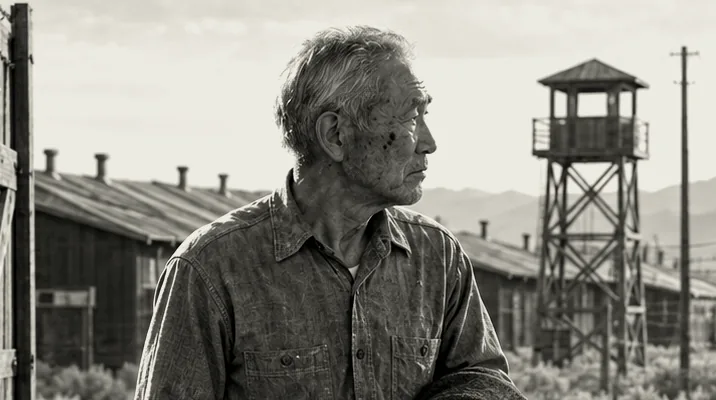
The Elder
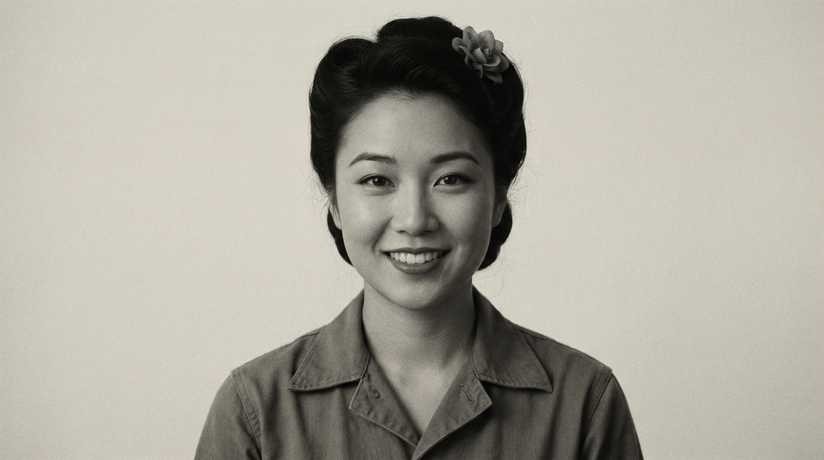
Issei narrator
First generation. Arrived before the war, never granted citizenship by law. Neither bitter nor forgiving — simply a witness who survived long enough to be believed.
Press Kit
One family. Two kinds of courage.
The wire that never moved.
Ready-to-use copy for listings and articles
Desert River is a sung-through 1940s jazz musical set inside a Japanese American incarceration camp during World War II.
In 1942, David and Emi lose their family shop to Executive Order 9066 and are sent to Desert River, a fictional camp named for a river that never runs. Emi survives by organizing; David resists every sign-up sheet. When the loyalty questionnaire splits the camp, the choice reaches into their marriage.
Desert River is a sung-through musical scored for small-band 1940s jazz, written for the people America uprooted in the sound of the America they still claimed. Narrated by an Issei elder who survived long enough to be believed, it follows David, a cynic who sees every sign-up sheet as paint over a cage, and Emi, an organizer who counts spoons at dawn and calls that resistance too. From the notice on the door to the 1943 loyalty questionnaire, the 442nd, and the long walk out of the gate, it is a story of one family, two kinds of courage, and the wire that never moved.
A warm morning in David and Emi’s family shop ends with an official notice on the door. Next door, a Chinese American shopkeeper performs his loyalty like a vaudeville turn until the exclusion signs go up beside him. The couple argue over whether speaking the truth will cost them everything, pack their past away by night, and are taken to a fairground assembly center. At Desert River, sign-up sheets promise order inside an unmistakable prison, while a cheerful WRA clerk sells the incarcerated as “model colonists.” Emi and the children build a rock garden between the barracks, David’s skepticism softens as he helps build a hall for the children, and a dance behind the wire rekindles their love just as the loyalty questions arrive.
The 1943 loyalty questionnaire turns Questions 27 and 28 into a moral trap. Emi decides to sign “yes”; David refuses to stay neutral and stands with a targeted friend. As “yes-yes” and “no-no” labels divide the camp, yes-yes boys, no-no boys and draftees still play one more inning by the fence. Emi, judged “safe,” is pressed to inform on her husband. Volunteers are sent off to war while others are held back, a young man defends his choice to enlist, and a public standoff over a man taken for questioning gives way to a long night in the barrack, where the worst wires run through a marriage. The act ends as families fracture under pressure.
Letters from the front bring pride in the 442nd alongside a roll of the wounded and the dead. As the camp cheers the breakthrough at the Gothic Line, Mrs. Watanabe tells David that her son Kenji, a “no-no” drafted out of Tule Lake, was killed in the Vosges months earlier, and she will not let his death become proof of anyone’s argument. David and Emi lay down their judgment of each other. The WRA’s chipper sales pitch for “liberation” meets the Elder’s plain account of sold houses, church-basement hostels and old men too old to start over. Emi walks to the gate seeing that she has emerged as herself, families leave carrying what they know, and the finale vows to remember, rebuild, and stand against injustice beyond the wire.
At a glance
Leads and principal roles
Issei narrator
First generation. Arrived before the war, never granted citizenship by law. Neither bitter nor forgiving — simply a witness who survived long enough to be believed.
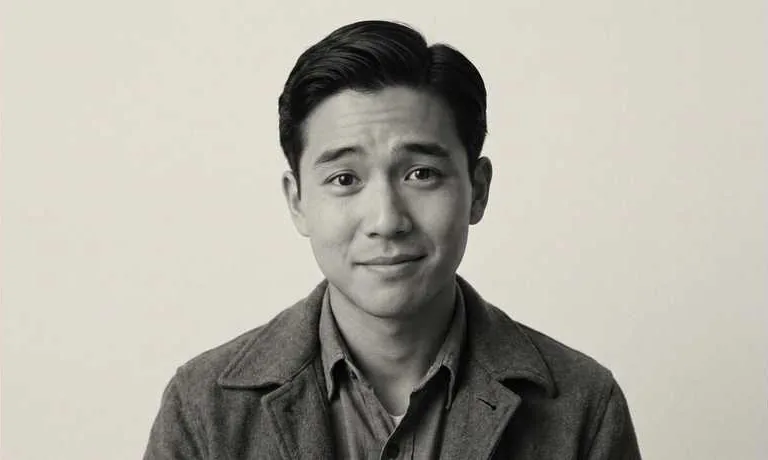
The husband · baritone
A cynic who sees every sign-up sheet as a coat of paint over a cage. Sharp, syncopated, and driven by a defiance he can’t put down.
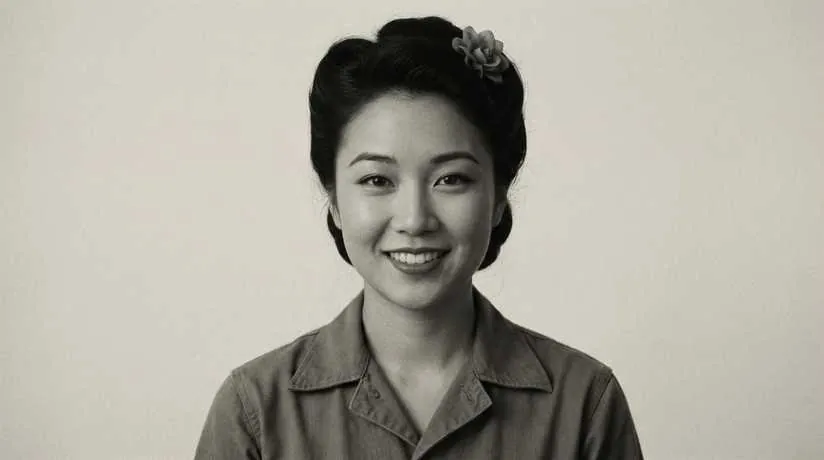
The wife · mezzo
An organizer who counts spoons at dawn and calls that resistance too. Warm, precise, and carrying more than anyone knows.
Each title links to its song video
Exile and Collision
Loyalty Lines and Fractures
The Wire Never Bends
Bonus track: Go for Broke (Joji Nakamura) — a march and a toast for the 100th Infantry Battalion and the 442nd Regimental Combat Team.
All videos open on YouTube
Full song-video playlist: Desert River on YouTube. The concept recording can also be played song by song on the main site, where each song’s Dramaturg panel lists its historical sources.
Click an image to download the JPG
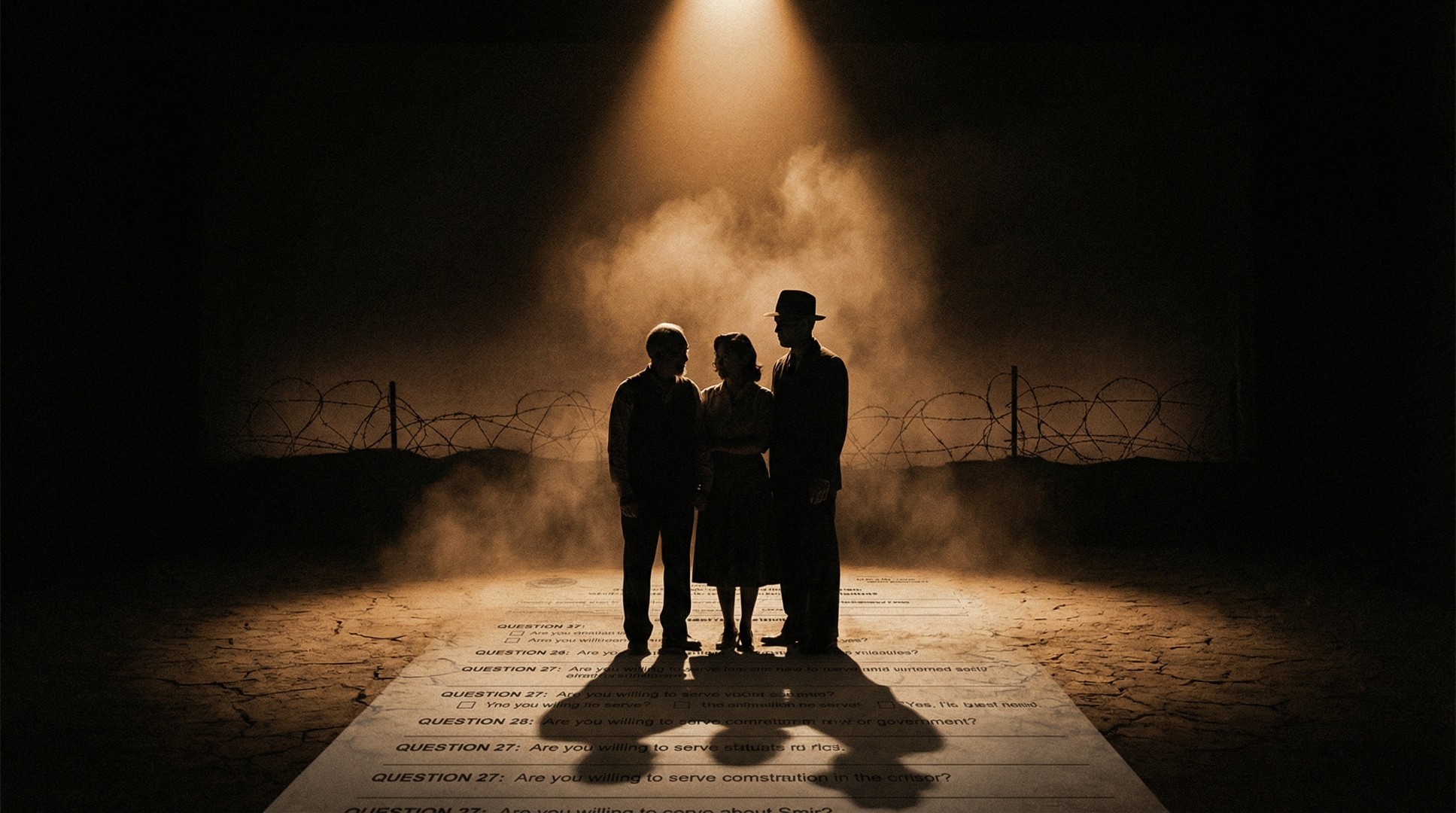
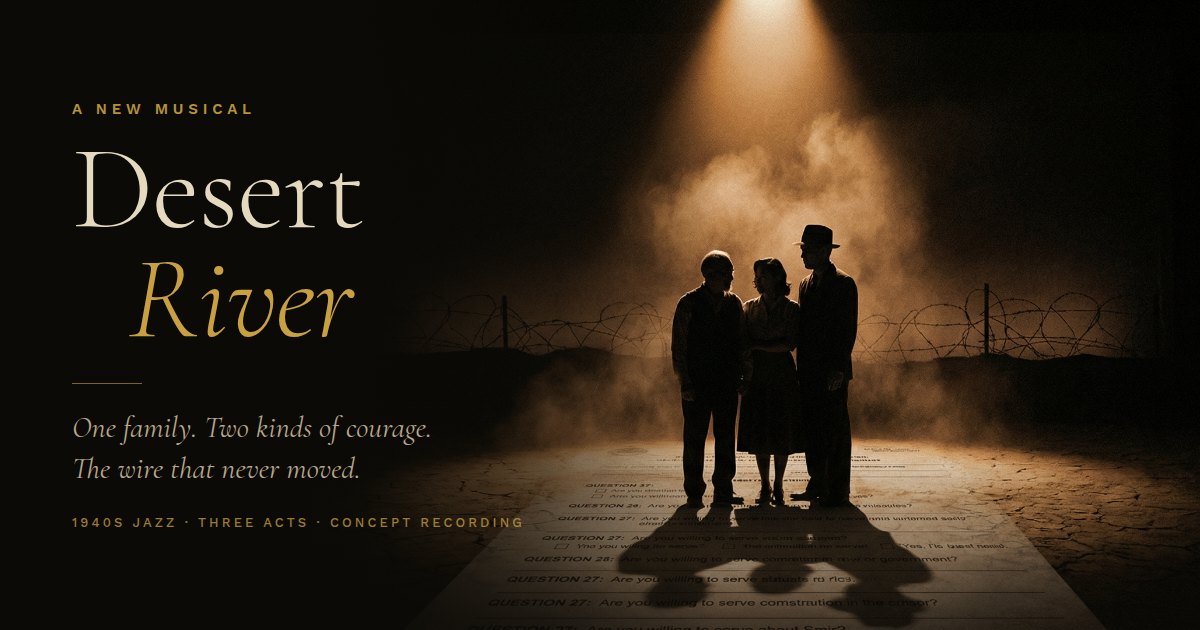
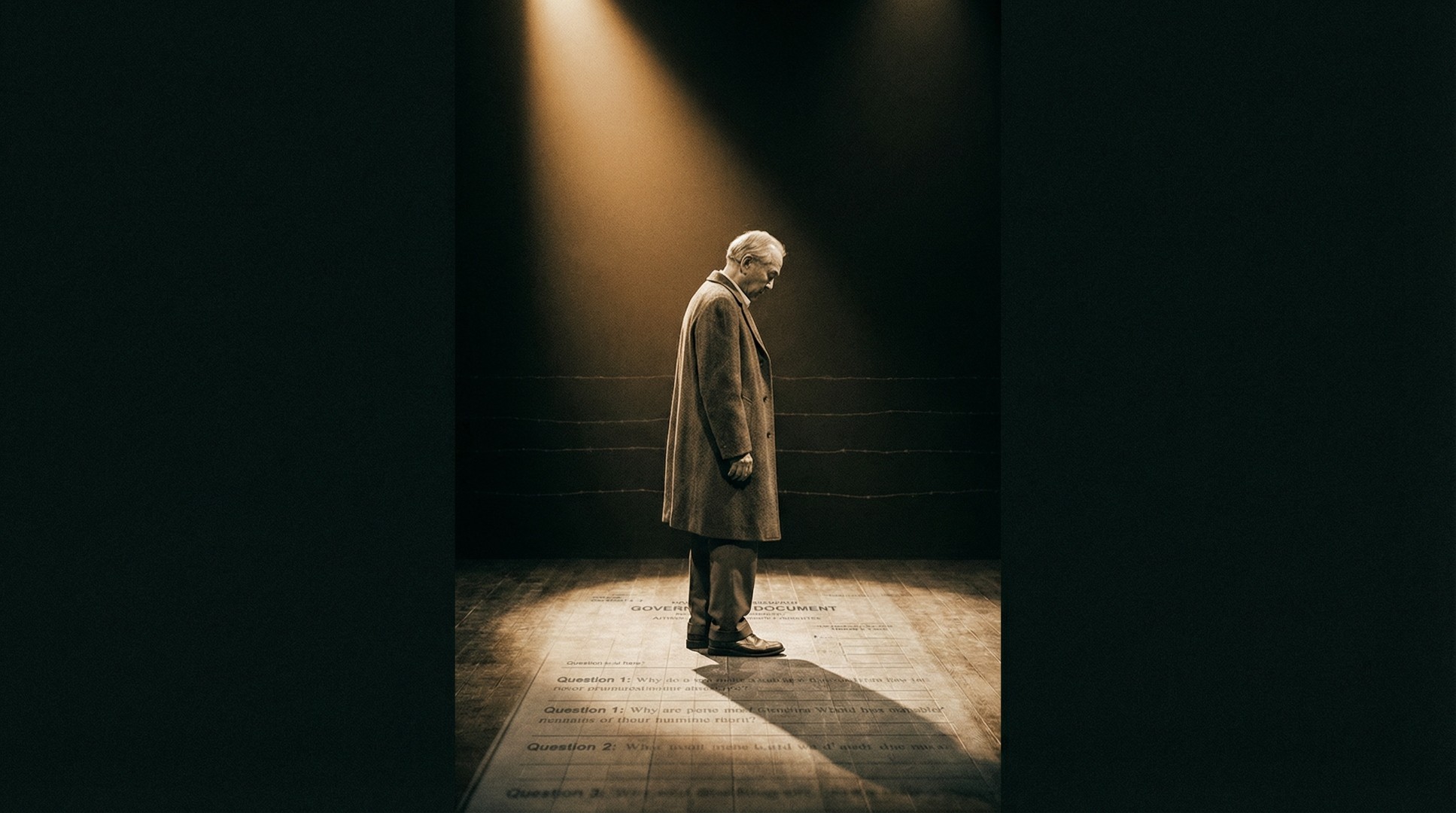
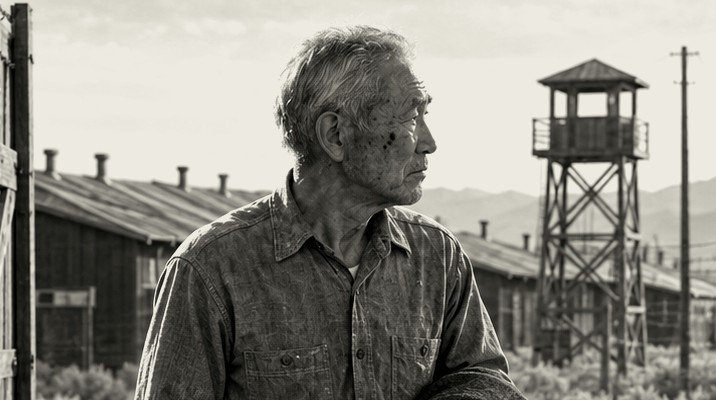
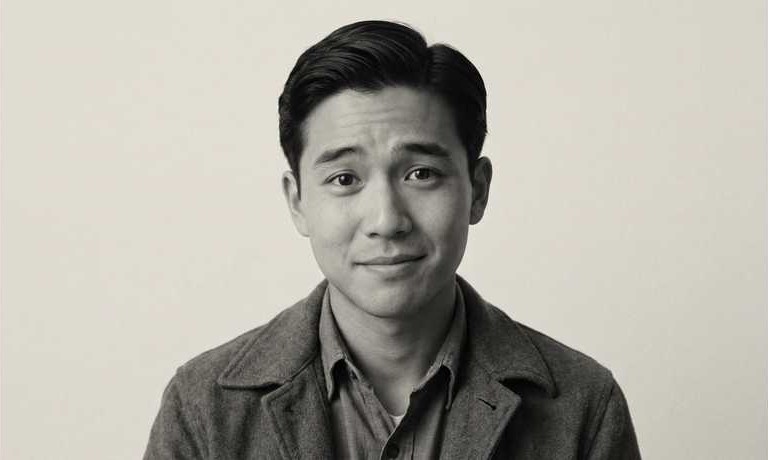
These images may be used in coverage of Desert River with the credit “Courtesy of Desert River.” They are AI-generated artwork and do not depict real people. The archival photographs shown on the main site are public-domain records from the National Archives and the Library of Congress; please obtain those directly from the credited archive. Download all six images (.zip, 0.9 MB).
Background for writers
On February 19, 1942, Executive Order 9066 authorized the forced removal of about 120,000 people of Japanese ancestry from the West Coast, two-thirds of them U.S. citizens. Most were held in ten War Relocation Authority camps. In 1943 a loyalty questionnaire forced those held in the camps to answer two questions about military service and allegiance; those who answered “no” could be sent to the Tule Lake Segregation Center. Thousands of Japanese American men served in the 100th Infantry Battalion and the 442nd Regimental Combat Team, among the most decorated units for their size and length of service in U.S. history. The Civil Liberties Act of 1988 brought a formal apology and $20,000 in redress to each surviving incarceree.
Every song on the main site has a Dramaturg panel with its primary sources, archival photographs and further reading.
Darrell Livingston
Darrell Livingston, Desert River’s Phoenix-based concept creator, is a retired military aviation officer and software developer. Raised in Auburn, California, he bought baseball cards at Tsuda’s Grocery, which the show honors. He built the musical and its companion website with the help of AI tools to tell a story of impossible choices.
Darrell Livingston is the Phoenix-based concept creator of Desert River. As a boy in his hometown of Auburn, California, he bought baseball cards and candy at Tsuda’s Grocery. While researching the musical, he learned the store had closed in 1942 when the family was incarcerated, then reopened in 1951 and kept going for another five decades. That history helped shape the project.
A retired military aviation officer with more than 24 years of active service, he then spent 12 years contracting with Lockheed Martin, FlightSafety International, and CAE USA. He was stationed in the Philippines, Korea, and Thailand, attended college in Taiwan, and studied Thai at the Foreign Service Institute.
A software developer without formal musical training, he wondered whether AI could create compelling songs. One or two experimental songs grew into Desert River, a full-length, historically grounded musical about impossible choices and how quickly civil liberties can be lost.
How the work was made. The lyrics and spoken-word content of Desert River were developed using AI generation tools, informed by documented historical sources including U.S. government records, oral histories, the Densho Digital Repository and the Library of Congress Japanese American incarceration collections. The music and images were also created with AI generation tools. They are works of creative fiction inspired by the period and do not depict real individuals.
Interviews, review access, images and permissions
Thank you. Your inquiry has been sent.
The creator will reply to the email address you provided.